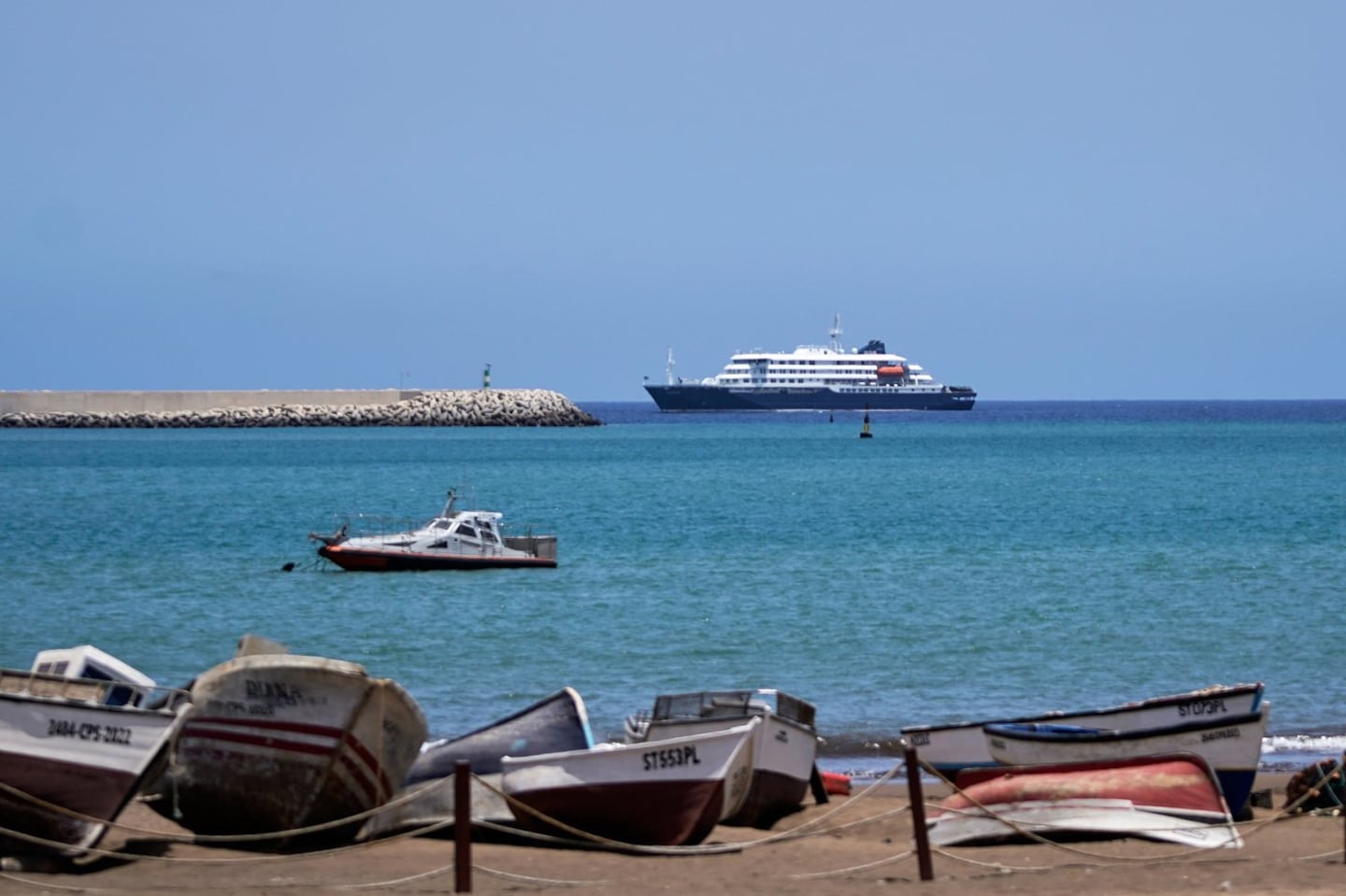
As the drama continues to unfold aboard a cruise ship coping with a suspected hantavirus outbreak, a Canadian expert thinks more public awareness about the virus is a good thing - even if the risk in Canada is very low. “I would encourage people to learn more about this virus, because it is present and it is a background threat,” said David Safronetz, chief of special pathogens at the Public Health Agency of Canada in Winnipeg. Safronetz says the first thing to understand is that there isn’t a single hantavirus. Hantaviruses are a large family of related viruses that can cause two different diseases in humans — one targeting primarily the kidneys, found mostly in Europe and Asia, and another found mainly in the Americas that attacks the lungs. “It is very lethal,” he said of the lung-targeting disease. “Up to 40 per cent of individuals that become infected will eventually succumb to the infection.” Known as Hantavirus Pulmonary Syndrome, the illness often begins with fever and muscle aches before progressing to shortness of breath, a dry cough and a rapid heart rate Three people have died and at least three others have fallen ill aboard the MV Hondius, a Dutch-flagged expedition cruise ship currently anchored off Praia, the capital of Cape Verde. The vessel departed from Ushuaia, Argentina, more than a month ago and made stops in Antarctica before heading north across the Atlantic. Safronetz says clusters of hantavirus cases aren’t uncommon and occur more frequently in places like South America, where large numbers of rodents live in close proximity to humans. He says it isn’t yet clear how the virus got aboard the Hondius. “Somehow the virus was introduced to the cruise ship,” he said, noting it could have been a person who was infected before boarding and passed it on to other passengers, or rodents may have contaminated a food source. “The cruise ship itself being an enclosed vessel, tight quarters, it really does allow for the virus to transmit a little bit more efficiently.” He says the only hantaviruses known to cause human-to-human transmission originates from South America – more specifically, Argentina, where the cruise ship departed from. “That’s what makes this outbreak a little bit more concerning, because of the possibility that it is one of these strains of hantavirus,” Safronetz said. There is no specific treatment or vaccine for the disease, he says, making early detection critical. “Early identification and getting to appropriate medical facilities is really key.” The virus spreads primarily through contact with rodent excrement. On rare occasions it can pass from person-to-person, but experts say that requires extremely close contact. It also has a long incubation period. “It could be up to three weeks before somebody who’s infected actually realizes they’re infected,” said Safronetz. “At that point, they could theoretically be infectious to others.” And once symptoms appear, the disease can progress quickly. “The onset can be rapid, and death can occur within 24 to 36 hours,” he said. “So rapidly getting yourself to seek medical attention is critical.” Hantavirus made headlines last year when Betsy Arakawa, wife of actor Gene Hackman, died of the infection. In Canada, cases are rare. According to the National Collaborating Centre for Infectious Diseases, an average of four-to-five new hantavirus cases are reported each year, most in rural parts of the western provinces. By contrast, Safronetz says Europe and Asia see tens of thousands of cases annually, though cases that attack the kidneys are not as deadly. With the spring season underway, Safronetz says Canadians should take precautions around rodents - particularly when reopening seasonal properties. “Especially at this time of the year in Canada, when you’re opening up seasonal buildings like cabins, cottages and sheds that haven’t been occupied over the winter,” he said. “Mice love to get into those areas, and they love to breed and just hang out until the humans return. That puts people at risk.”
|